
Some posters don’t just look a certain way-they feel a certain way. Designers today aren’t obsessing over matching fonts or colors but matching vibes: cozy, chaotic, dreamy, futuristic, nostalgic, hyper-sleek-every mood becomes a design direction. And with Dreamina, along with the aid of an AI image generator, the ability to experiment with “vibeboards” means aesthetics can shift in an instant to fit brand personalities.
Mood-based poster design is more than a styling exercise. It’s emotional merchandising. It’s the difference between “here’s our event” and “here’s a whole feeling you want to be part of.”
Brands know that audiences don’t just scroll for information, they scroll for sensations. And the vibeboard effect taps directly into that.
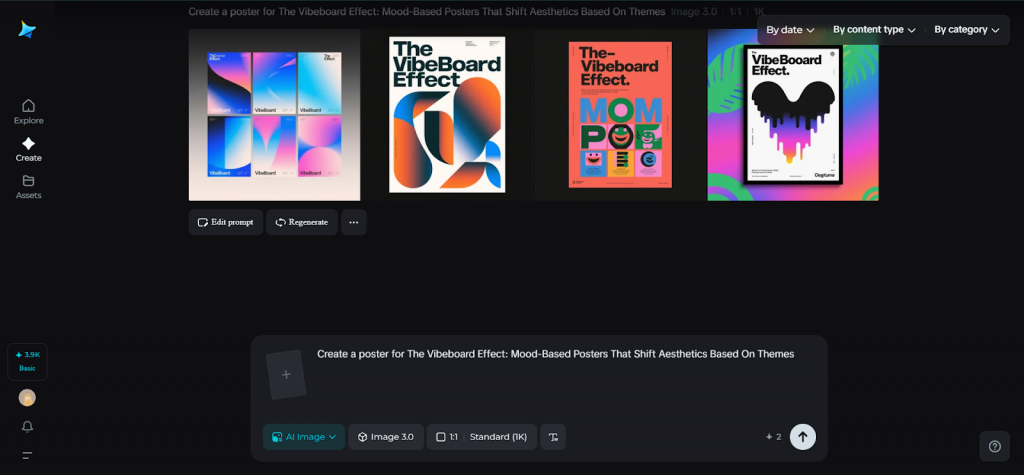
How moods guide poster identity
A vibe-driven poster centers its identity around a feeling first, visuals second. Designers often start by asking not “What should this look like?” but “What should this feel like?”
Everything is shaped by this approach:
- Warm tones for cozy, homey vibes
- Irregular shapes for chaotic, kinetic moods
- Glow, pastels, soft edges for dreamy atmospheres
- Metal surfaces, reflections, and sharp geometry for futuristic themes
Each vibe is its own micro-world, and the posters are portals into them.
The cozy aesthetic
Cozy posters are soft, inviting, and a little nostalgic. They feel like a graphical equivalent of warm socks or a slow café morning.
Designers regularly exploit:
- Tactile textures: paper grain, fabric weave, water color wash
- Warm neutrals and amber light accents
- Rounded typography that feels gentle and human.
Cozy posters don’t yell; instead they hum.
The chaotic aesthetic
Chaotic posters are successfully based tension, and instability with the intentional messiness. Imagine type dispersed all over, clashing colors, movement, and aliveness.
You will find:
- Angle shapes that disrupt the more smooth, felt previous layout
- Shrunk over sized, or skewed text
- Loud colors that create tension and refresh visual adrenaline.
This vibe works for brands that are seeking a bold, disruptive, or unapologetic loud predictable way.
The dreamy aesthetic
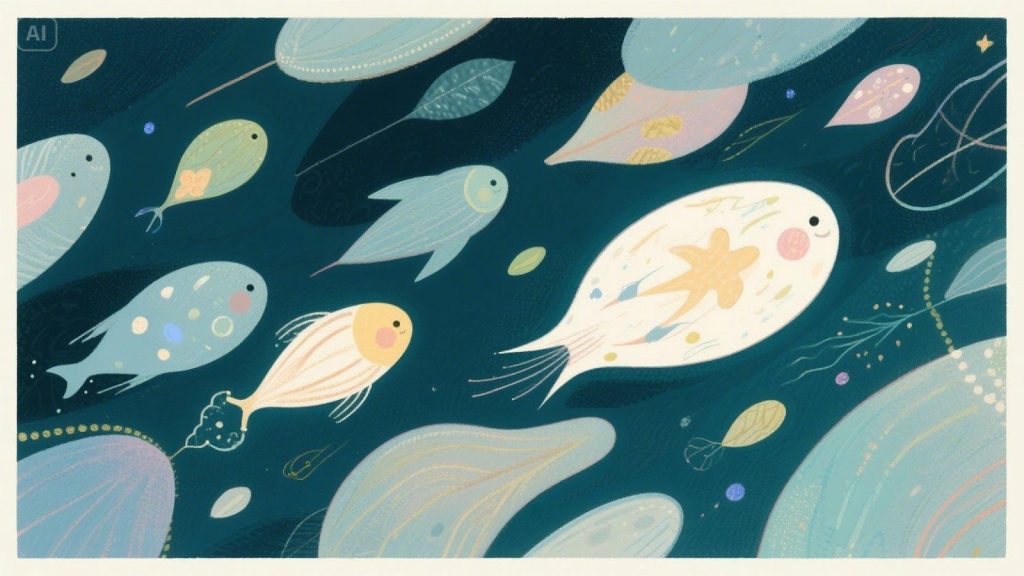
Dreamy posters float rather than sit. Everything feels soft and blended and a little surreal.
Creators use this vibe using:
- Pastel gradients and atmospheric glow
- Soft blurs and airy spacing
- Whimsical illustrations or drifting shapes. It’s the aesthetic of quiet magic, of comfortable imagination.
The futuristic aesthetic
The futuristic poster feels like it comes from 2035: chromatic metal, holographic shine, and AI-inspired structure embraced by the designer.
Common elements include:
- Neon with reflective accents
- Tech-style grid systems
- Sharp angles combined with liquid light effects
These posters make brands appear forward-thinking, fast-moving, and high-tech.
Where the motion elevates the vibe
Some designers extend the vibe even further by playing with subtle movements. With the help of an AI video generator, they try how particles float around in dreamy posters, how metallic reflections move in futuristic ones, or how jittery type trembles in chaotic layouts. Motion becomes part of the mood-an extension of the emotional language each poster speaks.
When artists enhance aesthetic moods with non-traditional tools
For many designers, going beyond manual illustration is necessary to push a vibe further. Some try with styled objects created by an AI art generator, textures, or bizarre elements. This opens to surprising visual combinations: reassuring patterns combined with futuristic light play, hand-drawn shadows mixed with shimmering surfaces. It’s a combination that goes beyond what’s normally feasible in terms of vibe vocabulary.
Vibeboards vs moodboards
While moodboards focus on “themes”, vibeboards focus on “emotions.
A vibeboard highlights:
- Tone over detail
- Feeling over structure
- Fluidity over perfection
It guides designers to create posters that resonate intuitively, not just visually. Vibeboards help teams align on the emotional purpose of a poster before making a single design decision.
Mini case vibes: How brands use mood-shifting visuals
Here are a few playful examples of how brands position themselves through vibe-driven posters:
The “slow life” brand
Soft, foggy gradients, handwritten fonts, desaturated neutrals. The poster whispers, “Take a breath.”
The “electric nightlife” brand
Vivid neons, sharp edges, and digital reflections make the poster crackle with energy.
The “calm luxury” brand
Cream-on-cream layering, accented in gold, with few lines. This poster exudes quiet confidence.
The “youth chaos” brand
Broken grids, loud colors, uneven textures: this screams fun.
Dreamina & the mood-shifting design ritual
Dreamina helps creators mix moods, build micro-worlds, and try aesthetic changes with complete freedom. And to help you try your vibeboard-style poster, here’s the clean, concise 3-step flow.
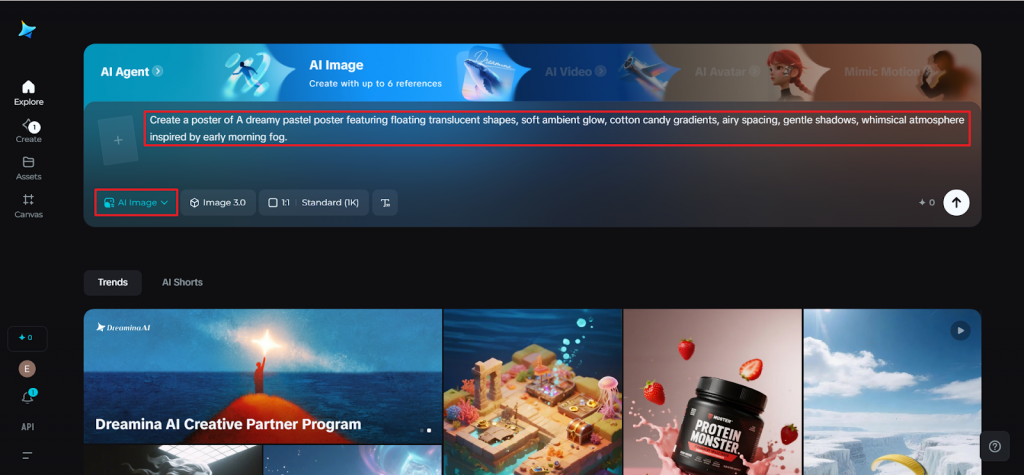
Step 1: Write a text prompt
Approach Dreamina and start writing a longer prompt that describes the vibe you want to evoke. Use mood language, lighting cues, texture details, and emotional tone. An example might be:
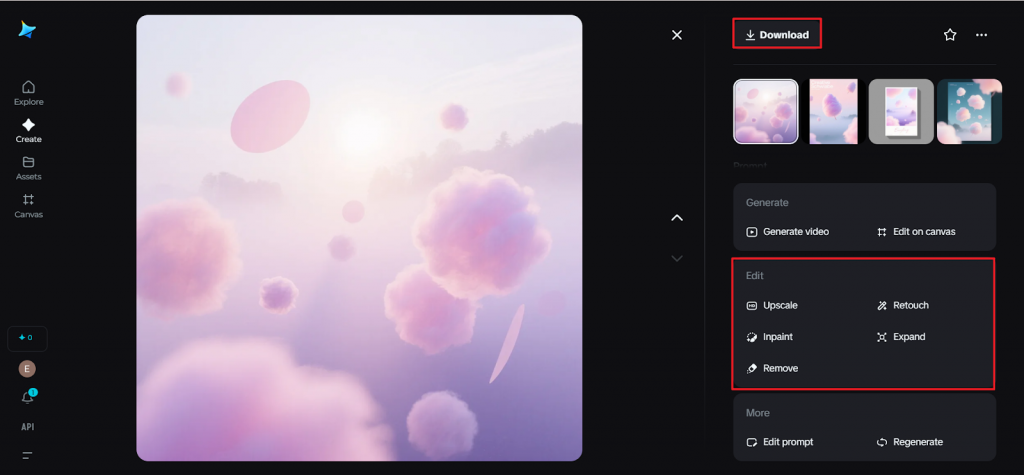
A dreamy pastel poster featuring floating translucent shapes, soft ambient glow, cotton candy gradients, airy spacing, gentle shadows, whimsical atmosphere inspired by early morning fog.
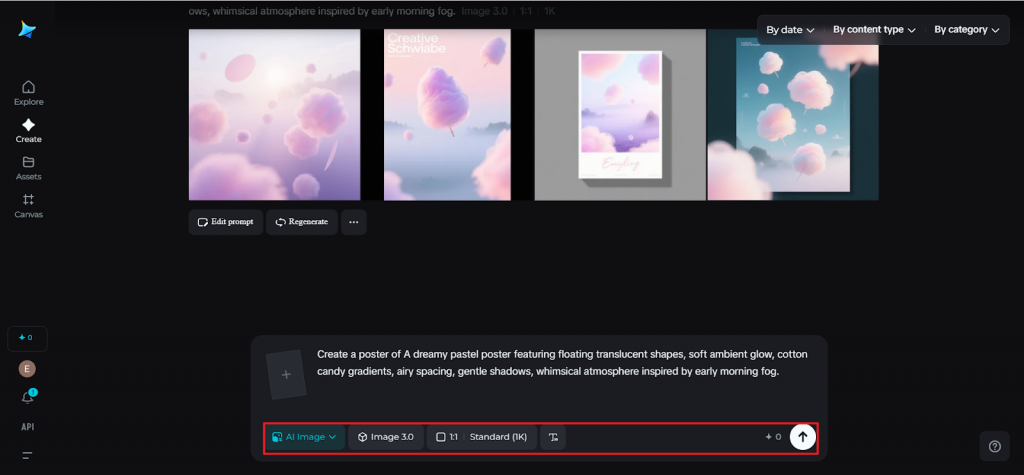
Step 2: Adjust parameters & generate
Choose your model, aspect ratio, size, and preferred resolution; the choices are 1k or 2k. Click on the Dreamina icon once your settings match your creative direction to generate the artwork.
Step 3: Customize and download
Use Dreamina’s inpaint, expand, remove, and retouch options to refine the poster and push the vibe even further. Once the design finally feels like the emotion you intended, click the “Download” icon to save it.
Wrapping it up with Dreamina
The vibeboard effect proves that posters aren’t just visuals; they are emotional cues. Designers today shape feelings, atmospheres, and micro-worlds that fit perfectly with brand identities. With Dreamina, cozy, chaotic, dreamy, or futuristic aesthetics become a creative playground in which every mood can evolve into a striking poster that feels alive.